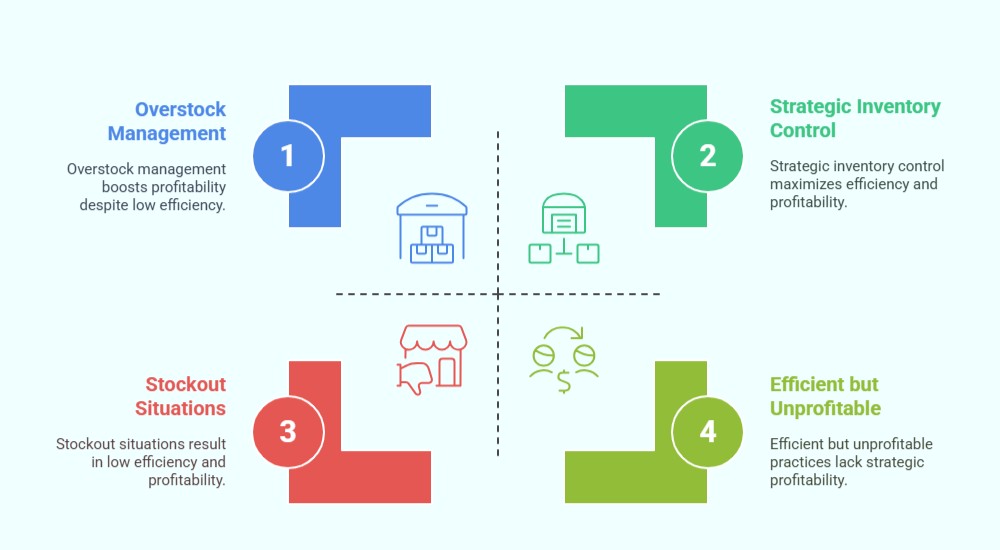
This comprehensive 5-day training course is designed to provide participants with a thorough understanding of the principles, techniques, and best practices for effective inventory management and control. The course will equip attendees with the skills to optimize inventory levels, reduce costs, improve efficiency, and enhance overall supply chain performance by strategically managing the flow of goods from raw materials to finished products.
The training will cover key topics such as the fundamentals of inventory management, different types of inventory, inventory costs, demand forecasting for inventory planning, inventory control systems and techniques (including EOQ, reorder point, safety stock), warehouse management principles, inventory accuracy and auditing, the impact of technology on inventory management, and strategies for continuous improvement in inventory processes. Practical sessions will involve case studies, simulations, and the application of inventory management tools and formulas.
Who should attend the training
- Inventory managers
- Supply chain analysts
- Operations managers
- Procurement specialists
- Warehouse managers
- Logistics coordinators
- Finance professionals involved in inventory costing
- Anyone responsible for managing or controlling inventory
Objectives of the training
- Understand the fundamental concepts and importance of inventory management and control.
- Identify different types of inventory and their specific management requirements.
- Analyze the various costs associated with holding and ordering inventory.
- Learn how to apply demand forecasting techniques for effective inventory planning.
- Master different inventory control systems and techniques, including EOQ and reorder point calculations.
- Understand the principles of efficient warehouse management and layout.
- Develop skills in ensuring inventory accuracy through cycle counting and physical audits.
- Recognize the role of technology and software in modern inventory management.
- Learn strategies for continuous improvement in inventory management processes.
Personal benefits
- Enhanced skills in inventory planning and control techniques.
- Improved ability to optimize inventory levels and reduce costs.
- Increased efficiency in managing warehouse operations.
- Better understanding of the impact of inventory on overall supply chain performance.
- Expanded career opportunities in inventory and supply chain management.
Organizational benefits
- Reduced inventory holding costs and obsolescence.
- Improved order fulfillment rates and customer satisfaction.
- Increased efficiency in warehouse operations and material flow.
- Enhanced accuracy of inventory records and reduced discrepancies.
- Better decision-making based on accurate inventory data.
- Improved cash flow through optimized inventory investment.
Training methodology
- Interactive lectures and presentations on inventory management principles
- Case studies and real-world examples of inventory challenges and solutions
- Group discussions and problem-solving exercises
- Hands-on workshops applying inventory management formulas and techniques
- Practical session: Calculating Economic Order Quantity (EOQ) and reorder points for different products
- Practical session: Developing a basic inventory control system for a small business
- Practical session: Planning and executing a cycle count in a simulated warehouse environment
- Practical session: Analyzing inventory data to identify opportunities for cost reduction
- Practical session: Developing a strategy for improving warehouse layout and efficiency
Trainer Experience
Our trainers are experienced supply chain and operations professionals with a strong background in inventory management and control across various industries. They bring practical insights and real-world expertise to the training, ensuring participants gain valuable and applicable skills.
Quality statement
We are committed to providing high-quality training that aligns with industry best practices in inventory management and control. Our course materials are up-to-date, and our trainers are dedicated to ensuring participants develop the skills necessary for effective inventory management and optimization.
Tailor-made courses
We offer customized training programs to meet the specific needs of organizations and industries. Our team can work with you to develop a curriculum that addresses your unique inventory challenges, product characteristics, and operational environment.
Course Duration: 5 days
Training fee: USD 1300
Module 1: Fundamentals of Inventory Management
- Definition and importance of inventory management
- Different types of inventory: raw materials, work-in-progress, finished goods, MRO
- The objectives of inventory management: balancing supply and demand
- Trade-offs in inventory management: costs vs. service levels
- Practical session: Identifying different types of inventory in a case study scenario
Module 2: Inventory Costs and Their Impact
- Holding costs (carrying costs): capital cost, storage cost, risk cost
- Ordering costs (setup costs): administrative costs, transportation costs
- Shortage costs (stockout costs): lost sales, customer dissatisfaction
- Economic considerations of inventory management
- Practical session: Calculating the total cost of inventory for a sample product
Module 3: Demand Forecasting for Inventory Planning
- The relationship between forecasting and inventory levels
- Qualitative forecasting methods for inventory planning
- Quantitative forecasting methods: time series and causal models
- Measuring forecast accuracy and its impact on inventory
- Practical session: Applying a basic forecasting technique to predict future demand
Module 4: Inventory Control Systems and Techniques
- Continuous review vs. periodic review systems
- Fixed-order quantity (EOQ) model and its assumptions
- Reorder point (ROP) and safety stock calculations
- ABC analysis for inventory prioritization
- Practical session: Calculating EOQ and ROP for a specific item using provided data
Module 5: Advanced Inventory Control Models
- Quantity discount models
- Probabilistic inventory models
- Material Requirements Planning (MRP) overview
- Just-in-Time (JIT) inventory systems
- Practical session: Comparing the implications of different inventory control models
Module 6: Warehouse Management and Layout
- Principles of efficient warehouse layout and design
- Storage strategies and optimization techniques
- Material handling equipment and processes
- Receiving, put-away, picking, and shipping processes
- Practical session: Developing a basic warehouse layout plan for a given scenario
Module 7: Inventory Accuracy and Auditing
- The importance of accurate inventory records
- Cycle counting methodologies and implementation
- Physical inventory processes and reconciliation
- Root cause analysis of inventory discrepancies
- Practical session: Planning and executing a simulated cycle count procedure
Module 8: The Role of Technology in Inventory Management
- Inventory management software and systems
- Barcoding and RFID technologies for inventory tracking
- Warehouse Management Systems (WMS) functionalities
- Data analytics and reporting in inventory management
- Practical session: Exploring the features of a sample inventory management software
Module 9: Strategies for Inventory Optimization
- Lead time reduction strategies
- Supplier relationship management and its impact on inventory
- Demand shaping and its influence on inventory levels
- Collaborative inventory planning and forecasting
- Practical session: Developing a strategy to reduce lead times for a key product
Module 10: Continuous Improvement in Inventory Management
- Identifying and addressing inventory management challenges
- Implementing Lean principles in inventory processes
- Utilizing performance metrics to drive improvement
- Benchmarking inventory performance against industry standards
- Practical session: Identifying opportunities for continuous improvement in a given inventory management system
Requirements:
· Participants should be reasonably proficient in English.
· Applicants must live up to Armstrong Global Institute admission criteria.
Terms and Conditions
1. Discounts: Organizations sponsoring Four Participants will have the 5th attend Free
2. What is catered for by the Course Fees: Fees cater for all requirements for the training – Learning materials, Lunches, Teas, Snacks and Certification. All participants will additionally cater for their travel and accommodation expenses, visa application, insurance, and other personal expenses.
3. Certificate Awarded: Participants are awarded Certificates of Participation at the end of the training.
4. The program content shown here is for guidance purposes only. Our continuous course improvement process may lead to changes in topics and course structure.
5. Approval of Course: Our Programs are NITA Approved. Participating organizations can therefore claim reimbursement on fees paid in accordance with NITA Rules.
Booking for Training
Simply send an email to the Training Officer on training@armstrongglobalinstitute.com and we will send you a registration form. We advise you to book early to avoid missing a seat to this training.
Or call us on +254720272325 / +254725012095 / +254724452588
Payment Options
We provide 3 payment options, choose one for your convenience, and kindly make payments at least 5 days before the Training start date to reserve your seat:
1. Groups of 5 People and Above – Cheque Payments to: Armstrong Global Training & Development Center Limited should be paid in advance, 5 days to the training.
2. Invoice: We can send a bill directly to you or your company.
3. Deposit directly into Bank Account (Account details provided upon request)
Cancellation Policy
1. Payment for all courses includes a registration fee, which is non-refundable, and equals 15% of the total sum of the course fee.
2. Participants may cancel attendance 14 days or more prior to the training commencement date.
3. No refunds will be made 14 days or less before the training commencement date. However, participants who are unable to attend may opt to attend a similar training course at a later date or send a substitute participant provided the participation criteria have been met.
Tailor Made Courses
This training course can also be customized for your institution upon request for a minimum of 5 participants. You can have it conducted at our Training Centre or at a convenient location. For further inquiries, please contact us on Tel: +254720272325 / +254725012095 / +254724452588 or Email training@armstrongglobalinstitute.com
Accommodation and Airport Transfer
Accommodation and Airport Transfer is arranged upon request and at extra cost. For reservations contact the Training Officer on Email: training@armstrongglobalinstitute.com or on Tel: +254720272325 / +254725012095 / +254724452588